
A travel agency’s customer relationship does not end with the booking confirmation — for the customer, that is when the travel experience begins. The weeks before departure, the trip itself and the return home are the moments when a travel agency can demonstrate the difference that a booking site never can. This article explains how travel agencies can turn that period into customer loyalty and repeat bookings.
What does a customer expect immediately after booking?
After payment, the customer’s needs shift from "choosing" to "looking forward to the trip". Specifically, they expect:
- clarity about what has been arranged;
- confirmation that everything is correct;
- practical information without having to search for it;
- something to look forward to;
- inspiration for the destination.
Anyone who sends only an administrative confirmation at this stage is missing the first and best opportunity to enhance the customer experience.
Why is a booking confirmation not a travel experience?
A PDF containing flights and hotels is useful, but it is an administrative document — it informs, but it does not inspire. The difference between a document and an experience is this: a document answers the question "is everything arranged?", while an experience answers the question "how wonderful will this be?". Travel agencies that answer the second question are remembered.
How do you turn the travel file into a taster of the trip?
The content is already there — the file simply needs to be presented differently:
- stories for each day of the trip instead of a list;
- photos of the destination and accommodation;
- information about hotels and locations in context;
- suggestions for free time;
- tips tailored to the travel party — a family with teenagers will receive different suggestions from a couple.
How do you stay relevant during the trip itself?
New information needs arise while travelling, day after day:
- what is planned for today;
- what is there to do nearby;
- where is the hotel;
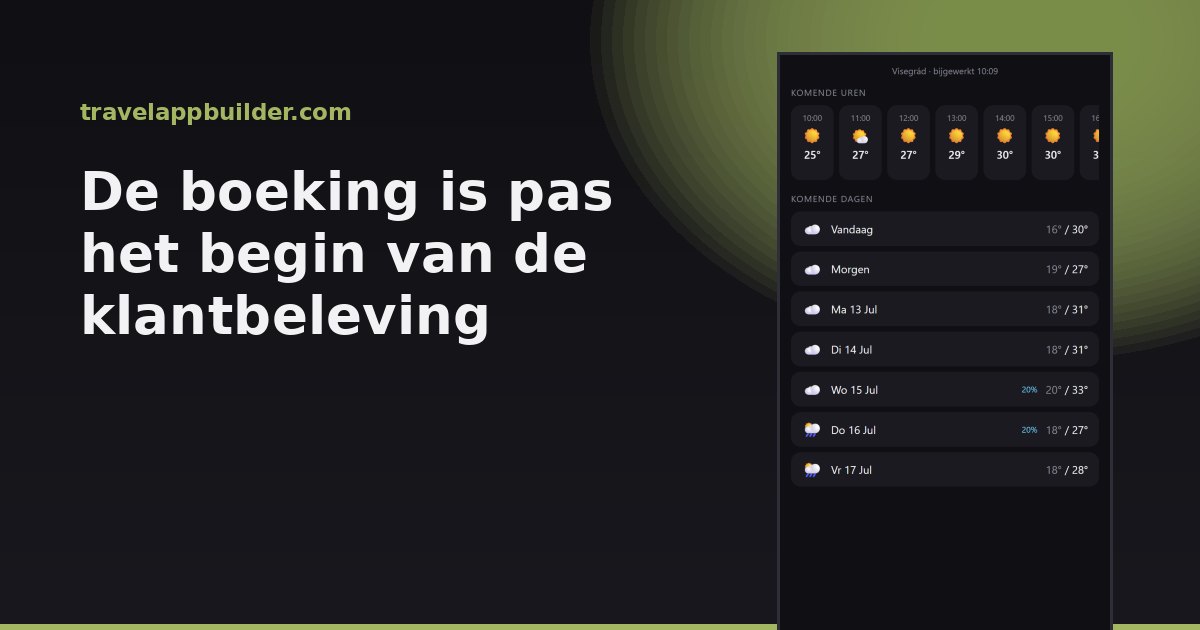
- what weather is expected;
- how do you say something in the local language;
- which information is available offline.
A personal travel app answers those questions at the right moment — with the travel agency’s logo on display every day of the trip.
Which customer questions can you avoid with a clear travel app?
Every travel agent knows the calls and messages. An app that brings everything together prevents the same recurring questions:
- "Where are we staying tonight?"
- "What is the hotel address?"
- "What time are we leaving?"
- "What can we still do today?"
- "What is there to do nearby?"
- "Where can I find the documents?"
Fewer practical questions mean more time for advice — the work through which a travel agency can genuinely make a difference.
How do satisfied travellers become returning customers?
The commercial chain is simple: a better experience leads to a higher opinion of the travel agency, more recommendations to friends and family, and a greater chance that the next trip will be booked through the agency again. Customer loyalty is not a campaign that happens afterwards — it is the sum of every moment in which the agency visibly added value.
Does the customer experience end when the customer returns home?
No — there are opportunities after the trip as well: a thank-you message, a brief request for feedback or a suggestion for the next destination. A travel app that wraps things up neatly with the travel agency’s details naturally directs the customer back to the agency.
Make every booking the beginning of a long-term customer relationship. To find out how to turn an existing travel file into a travel app like this in just a few minutes, read From travel file to personal travel app — or try the demo now.